
USAccess Assured Identity Scheduler
Overview
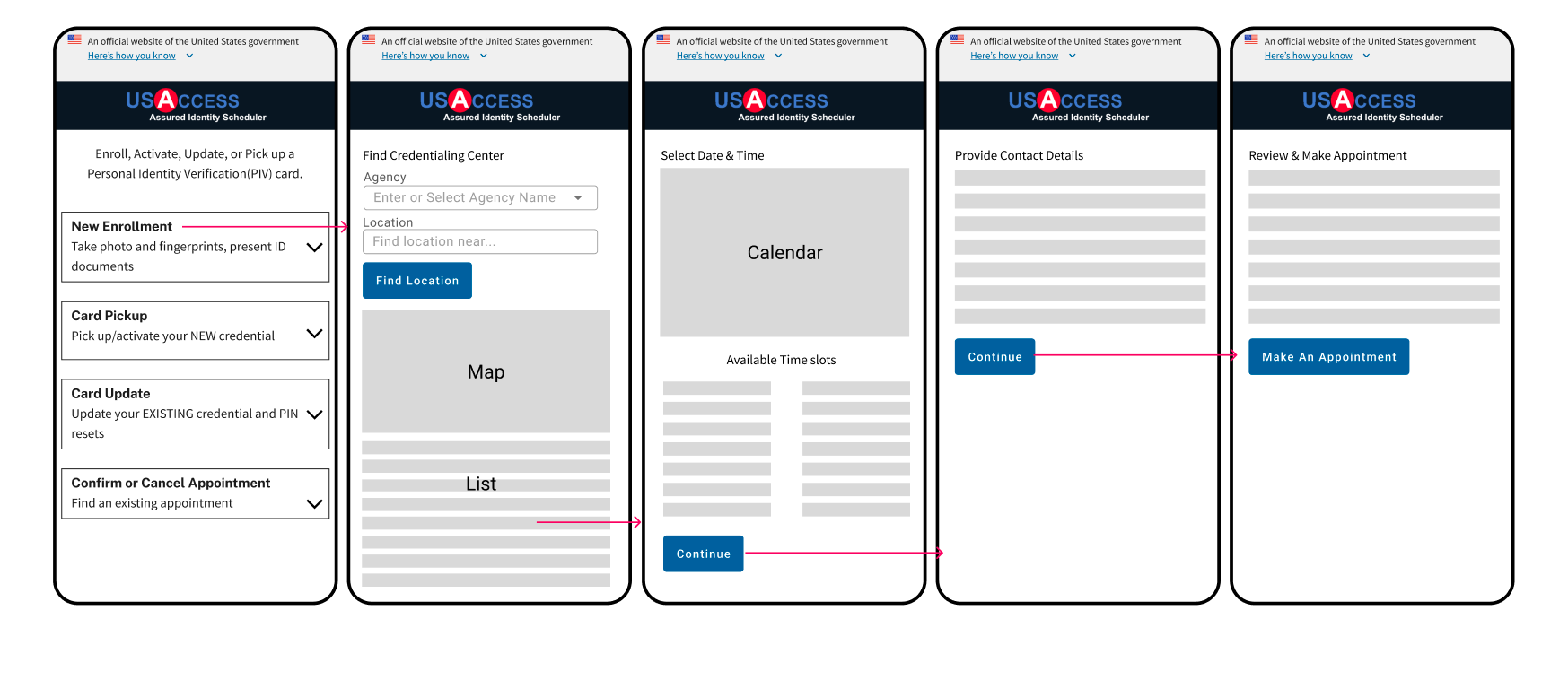
I led the UX design for Peraton’s GSA (General Services Administration) customers to improve the Personal Identity Verification (PIV) card appointment scheduling process. The goal was to enhance the user experience by optimizing the flow for enrolling, activating, and updating PIV cards—an essential tool for accessing federal facilities and information systems.
The challenge
I had 8 weeks to quickly assess user frustrations and pain points, collaborate with leadership, and introduce innovative design solutions to demonstrate the value of UX design in improving business outcomes. My main goal: impress the GSA customers and show them how UX could transform their process. As a one-person UX team, the challenge wasn’t new for me. What was going through my mind: You’ve got this! You’re a champion—you’ve done this before.
My Role
I embraced the Design Thinking mindset, envisioning a user-friendly experience for the GSA Scheduler and transforming that vision into an intuitive, accessible, and easy-to-use interface that end users would love. I focused on developing an empathetic understanding of users—learning their needs, pain points, and emotions to gather insights that would inform both strategy and design.
I developed a flexible UX process to adapt to the needs of the project and deliver innovative solutions. Embracing the philosophy that usable is better than perfect, I prioritized delivering functional, efficient solutions over striving for unattainable perfection. I applied the Design Thinking framework throughout, utilizing various methods and activities. To Empathize, I conducted research to identify current user frustrations, usability issues, and pain points, ensuring a deep understanding of the problem. Aligning business needs with user goals was crucial at this stage. In the Define phase, I synthesized research, conducted stakeholder interviews, collaborated with experts, and performed heuristic evaluations to identify key pain points and user needs.
For Ideation, I generated creative ideas to simplify the scheduling process and developed a bird’s-eye view user flow. During the Prototype stage, I designed high-fidelity prototypes to visualize improvements, leveraging the U.S. Web Design System (USWDS) to ensure accessibility and mobile-friendliness.
In the Test phase, I validated the designs through feedback from my allies and experts, involving all GSA stakeholders—product owners, leadership, and a stakeholder group of 18—refining the design based on their insights. My approach to product development is to observe, test, iterate, learn, and repeat.
Finally, I handed off a widget library and style guide to the development team, providing guidance throughout the process.
The Results
I drove positive and highly visible changes that exceeded clients’ expectations.
Overall, this helped tie users' needs, desires, and motivations. Consequently, I have been awarded ‘BRAVO to our Stars - 2022’ for performance in recognition for driving GSA client satisfaction.
Led UX Innovation: I worked closely with stakeholders to align on goals and deliver an intuitive appointment scheduler. The redesigned system resulted in a more efficient, user-friendly experience.
Recognized the Value of UX/UI: GSA customers acknowledged the importance of UX/UI design, issuing a Task Order (TO) to formalize the improvements, which set the stage for future collaboration.
Built Strong Relationships: Through trust-building, I demonstrated how UX drives innovation and enhances user satisfaction, strengthening relationships with GSA’s Product Owners and leadership.
Lesson Learned
Explain UX Value & Build Allies: Clear communication about the value of UX work is key to gaining support and building strong relationships with non-UX colleagues.
Clear Communication: Adapting communication styles based on the audience’s roles and responsibilities helps inspire action and ensures alignment.
User-Centered Focus: Prioritizing user needs is crucial, especially under tight deadlines.
Iterative Testing: Prototyping early and gathering feedback led to a more refined and successful final design.